Step 1: What size tyres does your car actually need?
The single most important factor in how to choose car tyres is fitting the correct size. Your car's size specification directly affects speedometer accuracy, load capacity, fuel consumption, and safety systems like ABS and traction control. To find the right size, check the tyre placard on the driver's side door jamb, inside the fuel filler flap, or in your owner's manual. That placard lists the approved tyre size, load index, and speed rating for your vehicle. Never guess or rely on what the previous owner fitted.
Below is a quick tyre size guide to help you decode the numbers on your current sidewall. Using a Toyota Corolla 2020 as an example:
| Code example | What it means |
|---|---|
| 205 / 55 R16 91V | 205 = tyre width in millimetres |
| 55 = aspect ratio (sidewall height as a percentage of width) | |
| R = radial construction | |
| 16 = rim diameter in inches | |
| 91 = load index (615 kg per tyre) | |
| V = speed rating (240 km/h) |
Stick to the manufacturer-recommended size listed on your placard. If you are considering a plus-size upgrade (larger rims with lower-profile tyres), consult a professional – altering rolling circumference changes gearing and speedo readings, and it may void your insurance in Australia if not declared. For more details, see our tyre size guide.
Step 2: Which tyre type suits your driving conditions?
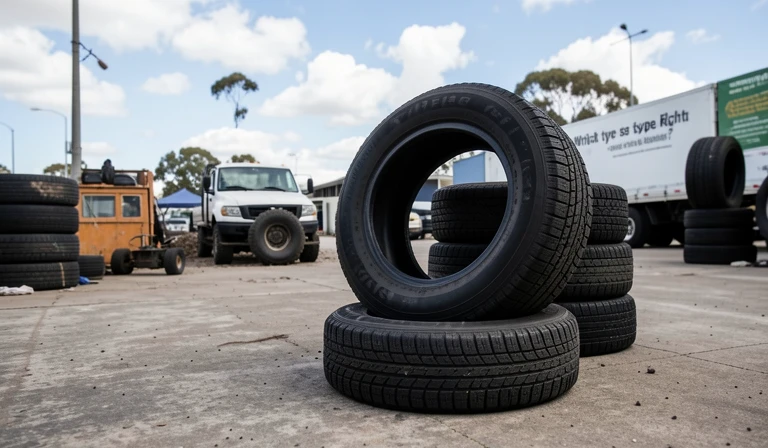
Once you know the size, match the tyre construction and tread pattern to where and how you drive most. Australia's climate and road surfaces vary enormously, so one tyre cannot do everything well.
- **Summer / highway touring tyres** – Best for sealed roads in warmer climates (most of QLD, NSW, WA). They offer low rolling resistance, quiet running, and good wet grip above 7°C.
- **All-season tyres** – A compromise option for temperate regions (coastal VIC, SA, TAS) that see occasional light frost but no heavy snow. They trade some dry-road grip for better cold-weather performance.
- **Winter tyres** – Essential for Australian alpine regions such as the Snowy Mountains and Tasmanian highlands, where temperatures regularly drop below 7°C and roads can be icy or snow-covered. Winter tyres use a softer rubber compound and deeper tread with sipes for grip on snow and ice. They are not suitable for year-round use in warmer areas as they wear quickly above 10°C. If you drive to ski resorts or live in a cold mountain area, fit winter tyres during the colder months. Check local regulations – some alpine roads require winter tyres or chains during snow season.
- **All-terrain (A/T) tyres** – Popular on 4WDs and SUVs used on gravel, dirt, and corrugations. They have deeper, more aggressive tread blocks and reinforced sidewalls. Expect more road noise and higher fuel use on bitumen.
- **Mud-terrain (M/T) tyres** – For serious off-roading: deep mud, sand, and rocky tracks. They are loud, harsh on sealed roads, and wear quickly on bitumen. Only choose these if you genuinely need them regularly.
- **Performance / ultra-high-performance (UHP) tyres** – For sports cars and hot hatches. Softer rubber compounds give exceptional grip but wear faster and cost more.
If you drive mostly in Sydney or Melbourne suburbs on sealed roads, a quality summer touring tyre is the right choice. If you live in a regional area and tackle unsealed roads weekly, look at all-terrain options. For alpine residents, winter tyres are a safety necessity.
The right tyre type for 90% of Australian drivers is a summer touring tyre. Off-road tyres only help when you actually leave the sealed road.
Step 3: How do you read the load index and speed rating?
Load index and speed rating are safety-critical numbers that many buyers overlook. The load index tells you the maximum weight each tyre can carry at full inflation. The speed rating indicates the maximum safe speed the tyre can sustain.
For an Australian family sedan or SUV, you generally need a load index of 91 (615 kg) or higher. For larger SUVs like a Toyota LandCruiser or Nissan Patrol, expect load indexes of 105–115 (925–1215 kg per tyre). Fitting a tyre with a lower load index than specified overloads the tyre, causing heat buildup and potential blowouts.
Speed ratings are letter-coded: T (190 km/h), H (210 km/h), V (240 km/h), W (270 km/h), Y (300 km/h). In Australia, legal speed limits never exceed 110 km/h, but you should still match the speed rating on your placard – not to go faster, but because higher-rated tyres often have stiffer construction that improves handling and heat dissipation at normal highway speeds.
| Speed rating | Max speed | Typical Australian use |
|---|---|---|
| T | 190 km/h | Light trailers, small vans |
| H | 210 km/h | Family sedans, hatchbacks |
| V | 240 km/h | Performance sedans, SUVs |
| W | 270 km/h | Sports cars |
| Y | 300 km/h | Exotics |
Never mix speed ratings on the same axle, and never fit a lower load index than the vehicle manufacturer specifies.
Step 4: Which brands offer the best tyres in Australia?
When people search for best tyres Australia, they are usually asking about the best balance of price, longevity, and wet-weather safety for local conditions. The answer depends on your budget and driving style, but a few brands consistently perform well in Australian testing.
- **Bridgestone** – Excellent all-rounders. The Turanza series (touring) and Potenza series (performance) are strong choices. Good availability across regional Australia.
- **Michelin** – Often the longest-lasting premium tyre. The Primacy and Pilot Sport ranges offer low rolling resistance and excellent wet grip. Premium price.
- **Continental** – Outstanding wet braking performance. The PremiumContact and SportContact ranges are top-rated by Australian motoring clubs.
- **Goodyear** – The EfficientGrip and Eagle series offer strong value. Goodyear frequently runs tyre-rotation and warranty programs.
- **Pirelli** – Focus on performance and luxury vehicles. The Cinturato and P Zero ranges suit European cars well.
- **Mid-range options** – Hankook, Kumho, and Falkon offer 80–90% of premium performance at 60–70% of the price. For many Australian drivers, these represent the best value.
The best tyre for you is the one that fits your size, load index, speed rating, and budget. Do not buy solely on price – a cheap no-name tyre can cost you more in fuel and replacement frequency, and it compromises safety in the wet. For a deeper look, see our brand comparison.
Step 4b: Budget vs premium – what price range fits your needs
Tyre costs vary widely. Budget tyres (e.g., from brands like Westlake or Sailun) may cost $80–$120 per tyre but often wear faster and offer less wet grip. Mid-range tyres (Hankook, Kumho, Falkon) range from $130–$200 and provide good value. Premium tyres (Michelin, Bridgestone, Continental) run $200–$400+ but can last longer and improve fuel economy. Consider your annual mileage: if you drive 20,000 km a year, a premium tyre that lasts 60,000 km may be cheaper per kilometre than a budget tyre that wears out at 30,000 km. Also factor in safety – better wet braking can be worth the extra cost.
Step 5: When to replace and how to maintain
Even the best tyres Australia can offer wear out or become unsafe before the tread is gone. Replace your tyres when:
- Tread depth reaches 1.5 mm or less (the legal minimum in Australia is 1.5 mm, but 3 mm is recommended for wet-weather safety).
- You spot sidewall cracks, bulges, or cuts – these indicate structural damage.
- The tyre is more than 6–10 years old, regardless of tread depth. Rubber hardens and loses grip over time. Check the DOT manufacturing date on the sidewall (the last four digits of the DOT code: e.g., 3522 means week 35 of 2022).
- You experience persistent vibration after balancing – this may indicate internal belt separation.
- The vehicle fails to hold pressure in one tyre more often than others.
A simple test: insert a 20-cent coin into the tread groove. If you can see the outer rim of the coin, your tread is below 3 mm and replacement is due soon. If you can see the word "Australia," you are at or below the legal limit.
Replace tyres in pairs (both front or both rear) at minimum. For AWD vehicles, all four tyres should be within 3–4 mm of each other in tread depth to avoid driveline damage. Always fit the newest tyres to the rear axle – this reduces the risk of oversteer and loss of control in wet conditions, even on front-wheel-drive cars.
Once you have chosen the right tyres, proper maintenance doubles their safe lifespan. Follow these steps monthly and before any long trip:
- **Check pressure cold** – Use the pressure listed on your placard, not the maximum printed on the sidewall. Check when tyres are cold (driven less than 3 km). Under-inflation causes shoulder wear and overheating; over-inflation wears the centre strip and reduces grip.
- **Rotate every 10,000 km** – Move front tyres to the rear and rear to the front on the same side (or cross-pattern for directional tyres, if allowed). This evens out wear between axles.
- **Align and balance** – Get a wheel alignment when you fit new tyres and annually thereafter. Balance wheels whenever you feel vibration or after a new tyre is fitted.
- **Inspect for damage** – Look for nails, cuts, bulges, and uneven wear. Feathering on one edge suggests alignment issues. Cupping suggests worn suspension.
In Australia, heat is the main enemy of tyre life. Park in the shade when possible, and avoid overloading your vehicle – each tyre's maximum load is on the sidewall, and exceeding it by even 10% significantly increases internal temperature and blowout risk. For a complete maintenance checklist, see our guide.
Choosing the right tyres for your car in Australia comes down to reading your placard, matching the tyre type to your roads, respecting load and speed ratings, picking a reputable brand within your budget, replacing at the right time, and maintaining them properly. Now you know how to choose car tyres for your driving style. Follow these steps and you will get the safest, longest-lasting performance from your investment.